
Dr. Aldon D. Morris on Sociology, Social Change, and the Enduring Legacy of W. E. B. Du Bois
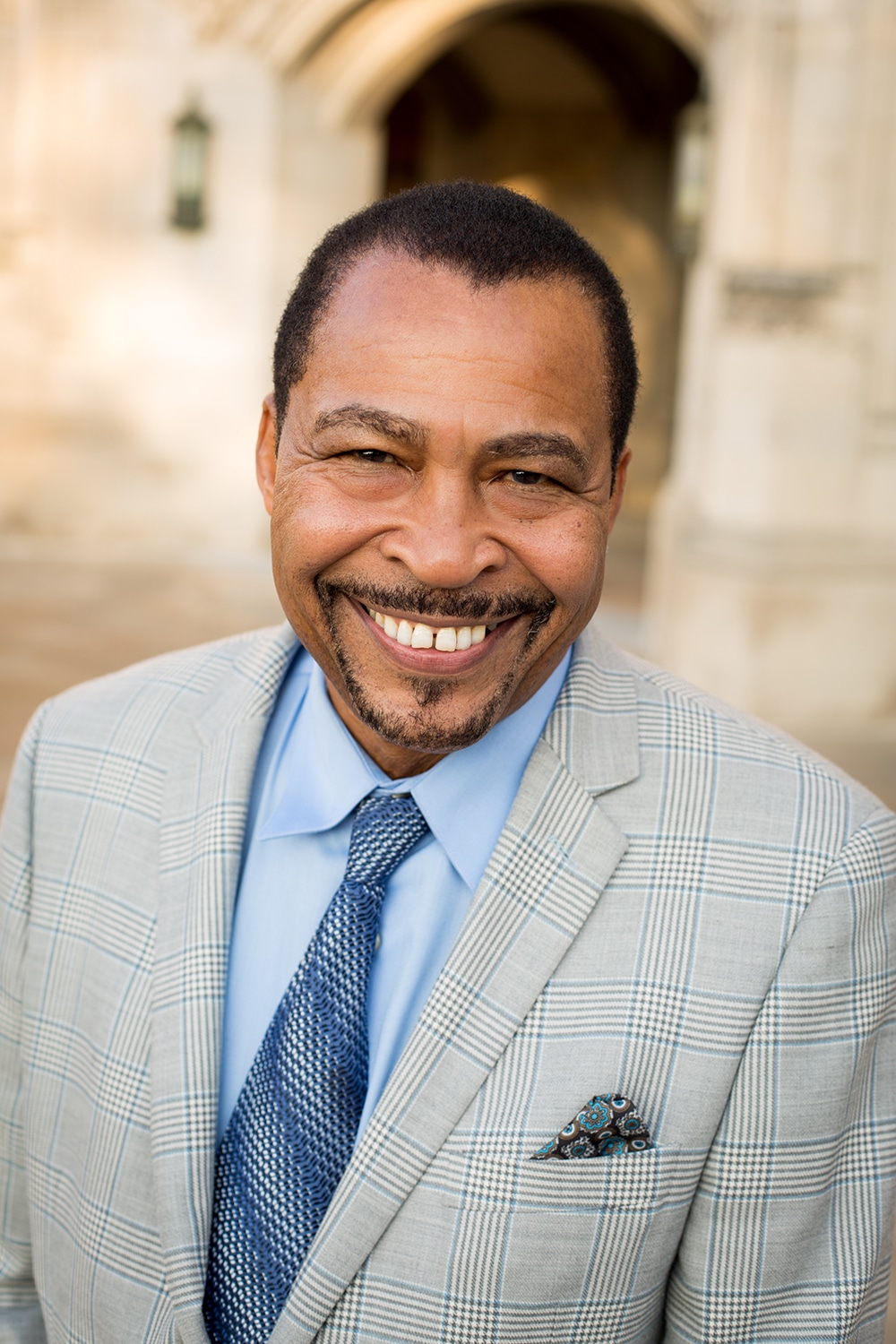 For more than five decades, Aldon D. Morris has helped reshape how sociologists understand race, social movements, and the history of the discipline itself. As Emeritus Professor of Sociology and Black Studies at Northwestern University, Morris has dedicated his career to demonstrating that sociology is not merely a tool for understanding society, but also be a force for transforming it.
This year, Alpha Kappa Delta is honored to welcome Morris as the 2026 Distinguished Lecturer at the American Sociological Association Annual Meeting.
During his lecture, Morris will explore the life and scholarship of W. E. B. Du Bois, tracing Du Bois’s intellectual contributions, activism, and the emergence of what Morris describes as Du Boisian sociology. The lecture will also examine historical efforts to marginalize Du Bois’s work and draw important parallels between those struggles and contemporary debates surrounding academic freedom, campus protest, and higher education. For Morris, these topics are not simply historical as they have deeply shaped his own life’s work.
Growing up in Chicago as a member of the Black community, Morris sought to understand the systems of domination that structured inequality. A sociology course at community college introduced him to the study of social movements, immediately capturing his imagination and ultimately setting him on the path toward a doctorate in sociology.
“I instantly became hooked on the study of sociology,” he recalls. Encouraged by mentors, he pursued graduate training with the goal of using sociology “to pursue Black emancipation and attack social inequality generally.”
That commitment has produced a remarkable scholarly legacy. Morris is the author of more than one hundred articles and several influential books, including Origins of the Civil Rights Movement and The Scholar Denied, both of which have had lasting impacts on sociology and beyond. His scholarship has been recognized through numerous honors, including the W. E. B. Du Bois Career of Distinguished Scholarship Award. He has also appeared in numerous documentary films, including The Scholar Affirmed, which chronicles his life and contributions to the discipline.
Throughout his career, Morris has argued that rigorous scholarship and meaningful social change are deeply interconnected.
“For me, scholarship and activism are intimately connected and cross fertilizing.”
That philosophy is also the advice he hopes today’s students and early-career sociologists carry with them. Rather than separating scholarship from public engagement, Morris encourages sociologists to pursue research that addresses issues they genuinely care about and contributes to broader struggles for justice.
His work also emphasizes a lesson that extends well beyond sociology: people facing oppression possess the capacity to transform their own circumstances.
“The oppressed possess agency to change their plight in life and in the society.”
As sociologists, Morris argues, we not only study that agency, but also have a responsibility to recognize it, learn from it, and help make it visible.
In the interview below, Morris reflects on his journey into sociology, the enduring influence of W. E. B. Du Bois, the relationship between scholarship and activism, and what it truly means to develop the sociological imagination.
We invite you to read his reflections and, if you’re attending the ASA Annual Meeting, join us for the 2026 Alpha Kappa Delta Distinguished Lecture!
Q&A with Dr. Aldon D. Morris
What can attendees expect from your 2026 Alpha Kappa Delta Distinguished Lecture?
I will discuss Du Bois’s personal background, scholarship, activism, the rise of Du Boisian sociology, and unsuccessful efforts to undermine Du Boisian sociology. I will also discuss attacks on academic freedom and campus protests, and how Du Bois addressed these challenges during his era.
Can you share a bit about your journey to and through sociology? What inspired you to pursue the discipline?
Being a member of the oppressed Black community, I yearned to understand how to overthrow this domination. While attending community college in Chicago, I took a sociology course that examined social movements, especially the Civil Rights Movement. I instantly became hooked on sociology and continued taking courses while earning my bachelor’s degree. Following the advice of mentors, I decided to pursue a doctorate in sociology and use this advanced knowledge to pursue Black emancipation and challenge social inequality more broadly.
Your contributions to sociology have been remarkable. Looking back, what accomplishments are you most proud of?
I was especially pleased to publish two books—Origins of the Civil Rights Movement and The Scholar Denied—that have had a major intellectual impact and have proven useful to activists. I have also published more than one hundred articles, several of which have had significant influence. I have been honored to receive numerous major awards, including the Best Book Award for Origins and the W. E. B. Du Bois Award for a Career of Distinguished Scholarship. I have also appeared in a dozen films, and I am particularly proud of The Scholar Affirmed, which chronicles my life and scholarship.
Much of your work has focused on W. E. B. Du Bois and social movements, particularly the Civil Rights Movement. What do you hope students and early-career sociologists take away from this body of work?
To be a great scholar, one must address issues that matter deeply to them. My career has been about producing work that is relevant to social change and useful to those working to create it. For me, scholarship and activism are intimately connected and cross-fertilizing. I believe in pursuing both passionately, and I encourage scholars—especially those early in their careers—to embrace these two powerful forces.
If there is one major insight from your years of research and scholarship that you wish more people understood, what would it be?
The oppressed possess agency to change their circumstances and society itself. As Frederick Douglass realized, “He who would be free must himself strike the first blow.” Scholars should explore this agency and make it crystal clear to those facing oppression. At the same time, scholars have much to learn from activists about human agency if they listen to and respect them.
Broadly speaking, what does being a sociologist mean to you?
Possessing and developing the sociological imagination in order to better understand oneself and the larger society is paramount. Moreover, one’s life is enriched when it makes excellent use of sociological knowledge to make human emancipation a realizable goal.