
Editorial Note:
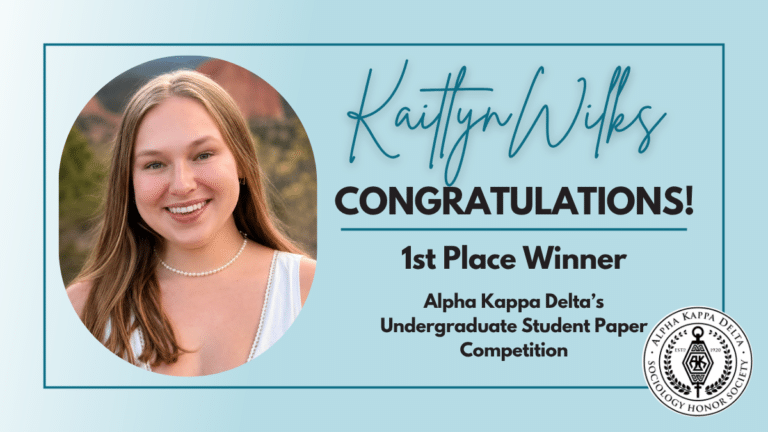
This blog feature was created by the Alpha Kappa Delta (AKD) Media Editor, Stephanie Wilson, in celebration of the first place winner in AKD’s 2026 undergraduate student paper competition, Kaitlyn Wilks.
Each year AKD sponsors an undergraduate student paper competition. Winners are eligible to win cash prizes and travel money to attend the American Sociological Association annual conference. The first place winner received $500 and up to $1,000 in travel expenses to the 2025 annual meeting of the American Sociological Association.
Continue reading to learn more about Kaitlyn Wilk’s winning paper!
Meet Kaitlyn Wilks
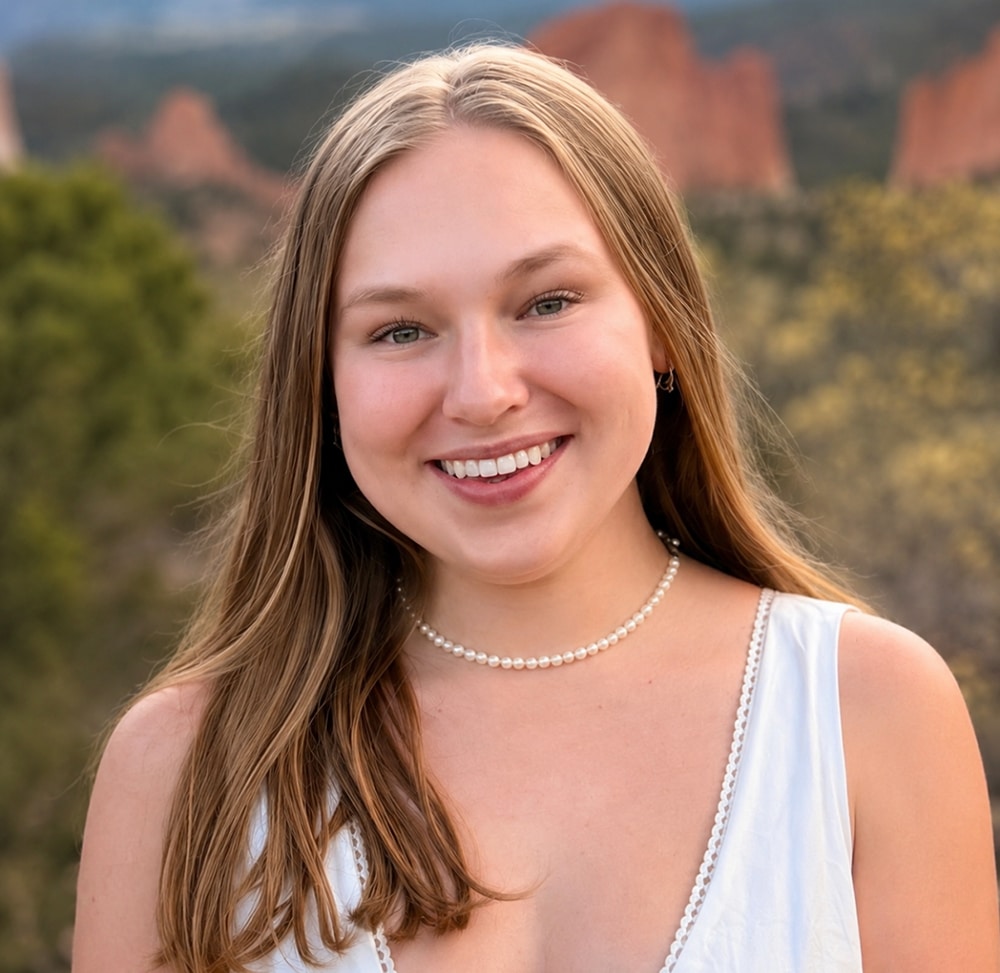 In the Spring of 2026, Kaitlyn Wilks graduated magna cum laude from Colorado College with my Bachelors of Arts in Sociology: Health and Society and a minor in Human Biology & Kinesiology. Her paper titled “More Than a Trip Around the Sun: A Sociological Analysis of Successful Aging and Functional Independence“ earned her a first place prize in our 2026 Undergraduate Student Paper Competition.
To learn more about Kaitlyn and her research, we reached out for a brief interview. Continue reading below to learn more about Kaitlyn, her award-winning paper, and her experiences as a sociology student!
Can you briefly summarize your award-winning paper?
Mainstream approaches in the U.S. treat aging almost exclusively as a biological process, one to be managed through the treatment and prevention of physical decline. I argue that aging should instead be understood as both biological and social, shaped not only by physiology but by social identities, lived experiences, and community engagement and support. Siloing aging into a purely biomedical framework obscures how deeply social context shapes the way people age.
What motivated you to write on the topic of your paper?
I am interested in going into physical therapy, specifically working with geriatric populations. PT as a profession that must look at the physical decline of the body as patients age, but I believe that it is vital for clinicians to consider a patient’s social identities and how they influence a patients’ physical and mental wellbeing. PT can be a place to improve biological aging outcomes, but also as a social support mechanism to continue to support patient growth.
As a sociology student, what has been your favorite class and why?
My favorite class studying sociology was called “Deviance and Social Control.” It was my first sociology course, and I was hooked. I loved the way that our professor, Dr. Cayce Hughes, pushed us to challenge the “why” behind what society considers deviant behavior. This course provided a foundational framework that I carried into the rest of my sociology studies: an intentional curiosity about the way things are, and a person-centered desire to change them.
What have been your biggest “aha” moments while studying sociology?
The biggest “aha” moment from my sociology coursework has been recognizing the value of human connection and community. I bring this into my daily life through a deeper understanding of the social forces and identities that shape people’s lived experiences. As I take my next steps into healthcare, this framework will be essential to providing compassionate, human-centered care.
If you had to choose one concept, theory, or idea from sociology that has had the biggest impact on how you view the world around you, what would it be and why?
The idea of “Successful Aging” (Rowe and Kahn 1997) has impacted me both personally and professionally. Aging is not just the absence of disease or disability, but rather a multidimensional process shaped by physical functioning, social engagement, and psychosocial wellbeing. This framework became the foundation of my thesis and changed my worldview profoundly. From my thesis, I learned that biology matters, but it doesn’t tell the whole story.
Lastly, how has your involvement with AKD impacted your experience as an undergraduate college student?
Being involved in AKD since my junior year has definitely deepened my dedication to the field. Winning the AKD Undergraduate Paper Award meant a lot to me, especially because it validated research that sits at the intersection of two fields I care deeply about: sociology and healthcare. Having my work recognized by AKD was an encouraging sign that sociological perspectives have real value in how we understand and care for older adults. As I head into the next stage of my career I’m grateful for the reminder that thinking about patients as whole people, shaped by their social world as much as their physical bodies, is something worth carrying forward.