
Editorial Note:
This blog feature was created by the Alpha Kappa Delta (AKD) Media Editor, Stephanie Wilson, in celebration of the second place winner in AKD’s 2026 graduate student paper competition, Rachel Springer.
Each year AKD sponsors a graduate student paper competition. Winners are eligible to win cash prizes and travel money to attend the American Sociological Association annual conference. The second place winner received $250 and up to $1,000 in travel expenses to the 2026 annual meeting of the American Sociological Association.
Continue reading to learn more about Rachel Springer‘s winning paper!
Meet Rachel Springer, PhD
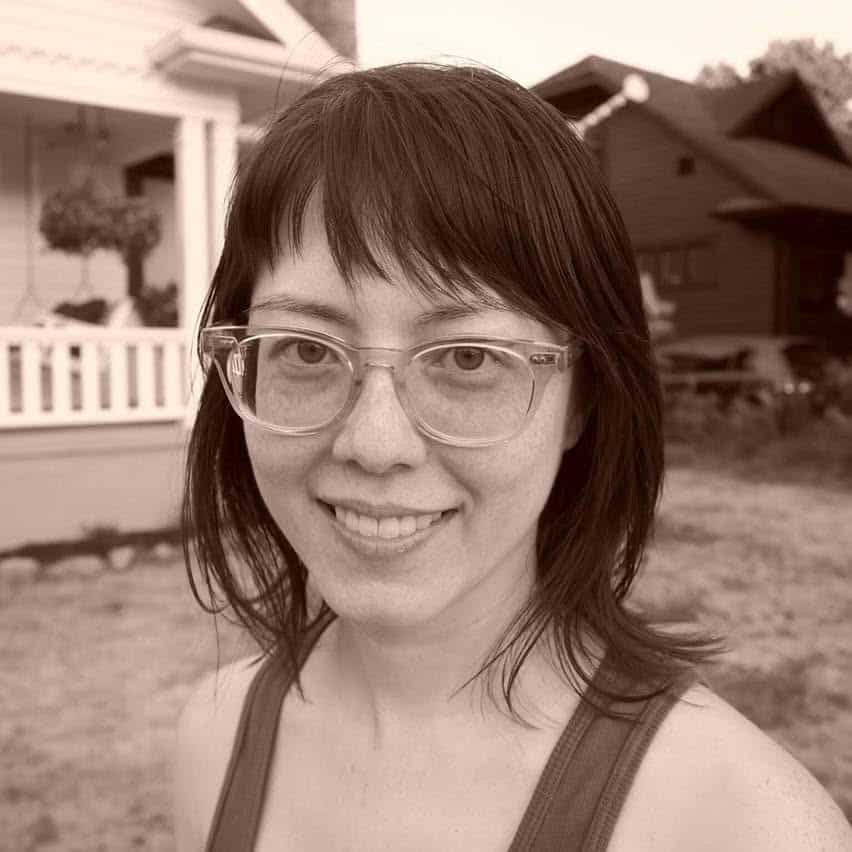 Rachel Springer earned her PhD in Sociology from Portland State University in June 2026 after previously working as a biostatistician in the Department of Family Medicine at Oregon Health and Science University. Her research interested include environmental sociology, the sociology of disasters, the sociology of risk, and medical sociology and her paper titled “Disability, Community Care, and Disaster Justice: A Research Framework” won her a second place prize in the 2026 AKD graduate student paper competition.
To learn more about Rachel and her research, we reached out for a brief interview. Continue reading below to learn more about Rachel, her research, and her future goals as a sociologist! You can also connect with Rachel on LinkedIn and Bluesky.
Can you briefly summarize your award-winning paper?
This paper theorizes the internal political displacement of LGBTQ+ people in the current moment as a disaster driven by the convergence of anti-LGBTQ+ legislation, infrastructural neglect, and environmental hazard. Drawing on interviews with 34 LGBTQ+ migrants to the Pacific Northwest, the majority of whom identified as disabled or chronically ill, it documents how navigating organized abandonment generates survival expertise expressed in the mutual aid networks, care infrastructures, and spatial reconfigurations these communities construct. It proposes a disaster justice framework that treats these communities as the architects of the research agenda rather than its subjects.
What motivated you to write on the topic of your paper?
As an environmental sociologist, I had been thinking about how political and environmental crises intersect and compound each other and wondering what that looks like in the communities I care about. But I kept returning to a more personal question: what does it take for people to integrate preparedness, solidarity, and community into their daily lives rather than treating them as responses to exceptional events?
If you had to choose one major takeaway to share from your paper, what would that be?
The communities most exposed to harm (queer, trans, disabled, BIPOC) have been building mutual aid networks, care webs, and collective resource pools for decades out of necessity. The major takeaway of this paper is that we should start resourcing these networks as the essential disaster infrastructure they are.
What has been your biggest “aha” moment while studying sociology?
I always found Laura Pulido‘s analysis of austerity as disaster policy compelling. Her argument that the Flint water crisis was produced by the deliberate withdrawal of state protection from a majority-Black city felt prescient when I first encountered it. It feels like a description of the present now, as federal dismantling of infrastructure makes the same logic visible at a national scale. What communities build when the state has decided their lives are not worth protecting is the question that drives my research.
How do you see yourself using sociology in your future career after earning your graduate degree?
I want to use sociology to produce research that is accountable to the people it studies. To me, that means moving toward participatory models where communities co-design the research questions and ensuring that findings are returned in forms that are usable by advocacy organizations, community-based organizations, and policymakers working toward more just outcomes.
Lastly, how has being involved in AKD impacted your experience as a graduate student in the social sciences?
The induction ceremony gave me a moment to mark a milestone in my graduate training outside of research and classwork rhythms. And having a faculty mentor who actively connects students to AKD writing retreats and conference funding has made the organization feel like a real resource.